
Published 23 September 2026
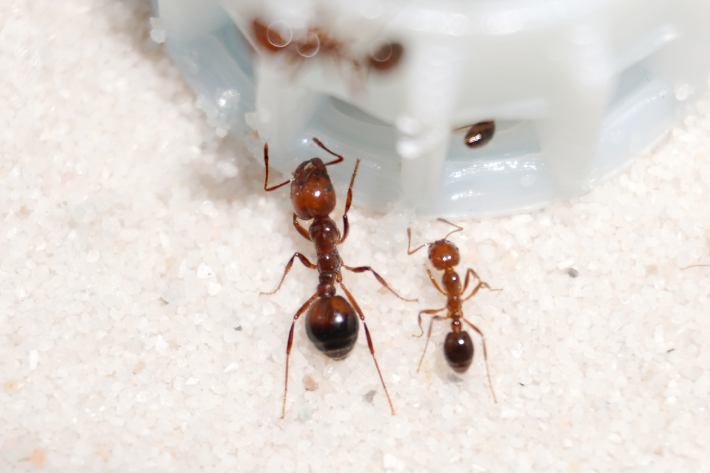
Our program is collaborating with CSIRO on innovative research that explores new ways to combat fire ants.
Researchers are investigating RNA interference (RNAi), a gene-silencing technology that targets genes critical to fire ant survival. The technology can temporarily disrupt biological functions such as feeding, communication, digestion, and reproduction while minimising impacts on non-target species.
Our Science team plays an active role in the research by:
- supporting experimental work with fire ant colonies
- helping establish research trials
- assisting researchers throughout the testing process.
Unlike traditional fire ant treatments, RNAi interrupts the genetic messages that tell an organism how to produce proteins needed for normal function. By targeting specific genes, researchers can disrupt biological processes that are critical to fire ant survival and colony development. This highly targeted approach could complement our existing treatment methods.
Early laboratory trials have shown promising results, and CSIRO scientists continue to refine the technology and identify the most effective genetic targets.
Our Director of Operational Capability Sharon Janssen said the research could help strengthen future fire ant eradication efforts.
'This work has the potential to deliver a valuable new tool for fire ant eradication in Australia while also contributing to global efforts to manage invasive species,' Sharon says.
'Innovation will play a critical role in overcoming the challenges of eradicating one of the world's most invasive pests. That's why it is important to continue investing in research and exploring new technologies that can strengthen our response and help achieve our goal of eradicating fire ants by 2032.'
Researchers are also developing a delivery system to spread RNAi molecules throughout an entire colony. To support this work, CSIRO is using patented RNA molecules designed to remain stable in the environment and throughout the ants' food-sharing networks.
RNAi technology is already being used in pest management overseas. Two RNA-based pesticides are currently registered for use, including one designed to control a parasite that affects honeybees. These examples demonstrate the technology's potential as a practical pest management control tool.
To learn more about the research and hear directly from CSIRO researchers, read the full article, Taking the sting out of fire ants with genomics.