
Published 11 August 2026
Compliance officers and inspectors are shifting into high gear, targeting vehicles breaching fire ant movement controls.
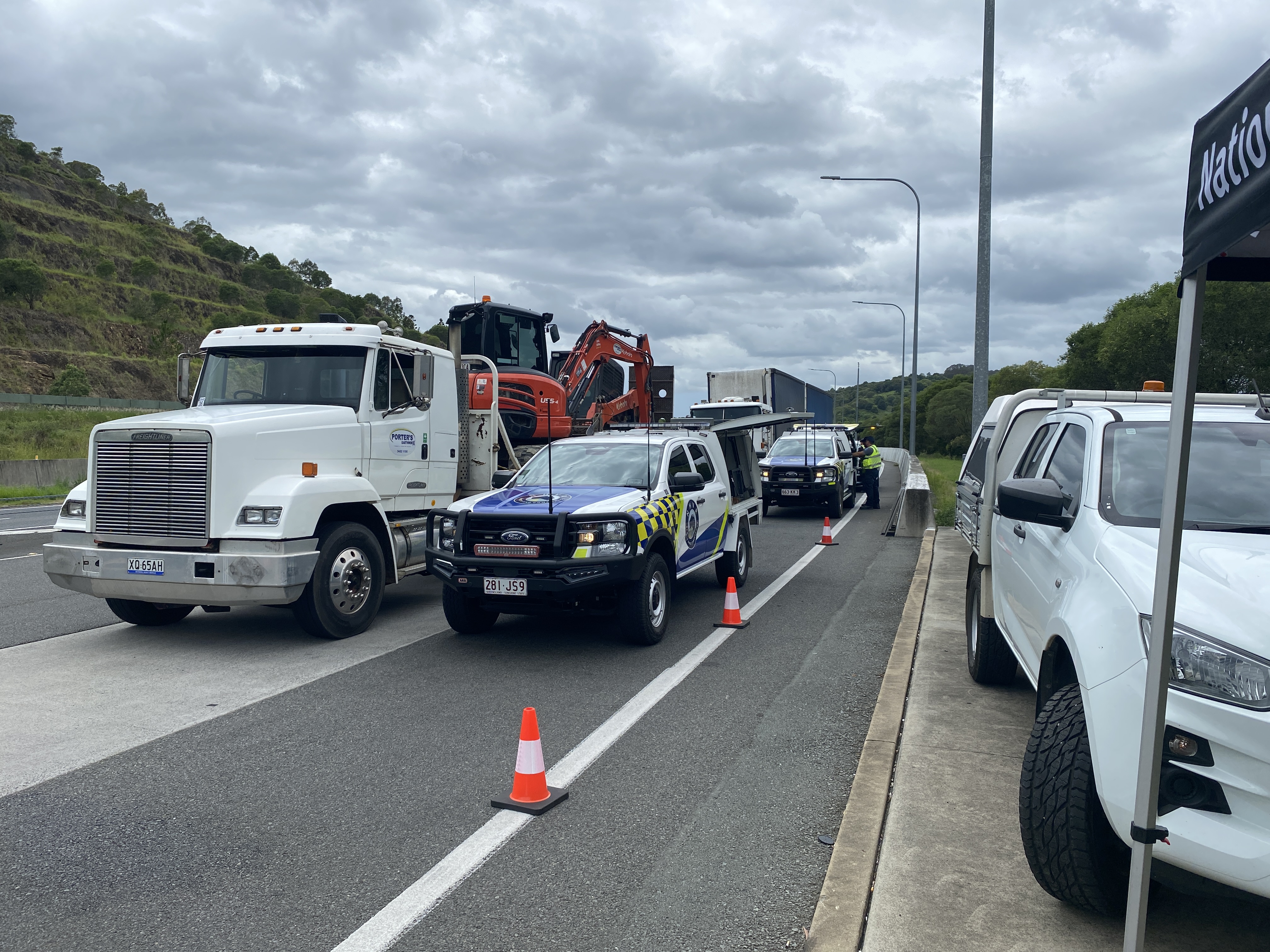
Trucks and other heavy vehicles leaving fire ant biosecurity zones are being randomly intercepted and inspected by our compliance team in a multi-agency operation to reduce the risk of fire ants spread.
In collaboration with the National Heavy Vehicle Regulator (NHVR) and New South Wales Department of Primary Industries and Regional Development (NSW DPIRD), the teams are ensuring businesses and drivers meet their general biosecurity obligation (GBO).
The focus is on vehicles hauling traditional materials that can carry fire ants—such as soil, hay, mulch, manure, mining or quarry materials, turf, potted plants—and non-traditional carriers like soiled machinery.
Since October 2025, 8 collaborative operations have resulted in 285 vehicles being inspected, with 45 found non-compliant. An additional 70 vehicles have been flagged for follow-up investigations. Alarmingly, 74% of non-compliant vehicles were linked to soiled machinery and other non-traditional carriers.
Our Compliance Manager Marcel Houbolt said every stop provides critical intelligence on vehicle movements out of fire ant biosecurity zones.
'Each operation helps us map the routes these invasive pests are taking. Our investigators are also using genetic analysis to trace the origins of fire ant movements,' he said.
The crackdown is set to continue, with NHVR and NSW DPIRD working closely with our compliance teams to ensure fire ants don’t hitch rides in heavy vehicles.
'Businesses and heavy vehicle drivers failing to follow fire ant movement controls or their GBO can expect a visit from our team,' Marcel said.
'Non-compliance may lead to infringement notices or other penalties—so it is in everyone’s interest to follow the rules.
'Following the rules are essential to protect our environment, economy, and outdoor way of life from fire ants.'
Learn more about how to stop the spread of fire ants.