
Published 14 April 2026
Sustainable farming practices
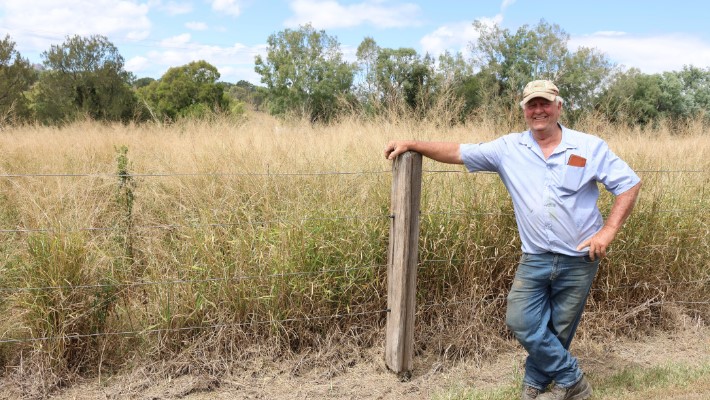
Tim, a seasoned hay producer in Scenic Rim, has over 20 years of experience to his farm. He understands that producing high-quality hay requires more than just coordinating with the cattle market and weather. In Queensland, it also means staying alert to fire ants.
Through his experience, Tim has learned that integrating biosecurity into daily operations is essential. These invasive pests are not just a nuisance. They pose a real threat to his farm, neighbouring properties, and access to key markets.
By staying vigilant and applying smart management practices, Tim protects his business while supporting the wider community. His approach shows that proactive biosecurity is key to sustainable farming.
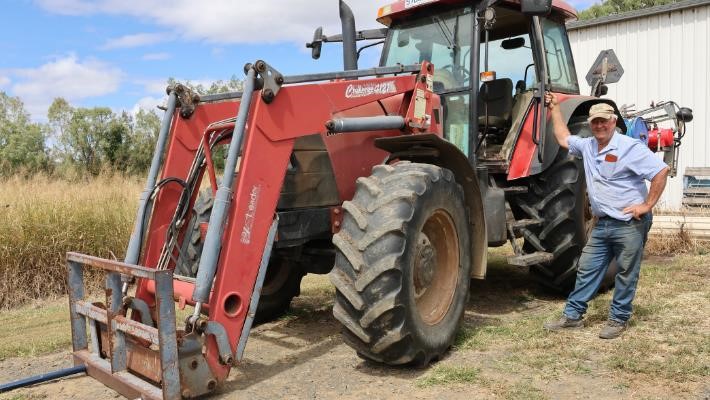
Pictured: Tim, Hay Producer in Scenic Rim.
Regulatory challenge
The National Fire Ant Eradication Program (our program) requires hay producers to take specific steps in hay management to prevent the spread of fire ants through infested baled materials.
Key requirements include:
- double raking hay within a 24-hour period
- baling within 24 hours of the final raking
- storing bales under cover on fire ant-resistant surfaces (that includes a chemical perimeter treatment), or elevated surfaces.
Integrating compliance into farm operations
Tim saw these requirements as part of the job, not red tape. Rather than doing the minimum, he focused on creating the best setup for his operation. His approach involves changes to both infrastructure and day-to-day operations:
1. Surface improvements:
- Installed concrete slabs under hay sheds to reduce the likelihood of fire ant establishment while improving shed functionality. While the regulation allows for simpler options such as plastic, Tim chose a more durable, long-term solution.
- Placed a thin layer of loose hay under the bales to prevent moisture accumulation, as hay can ‘sweat’ when it sits directly on concrete. Care was taken to ensure the hay did not create bridging that could compromise the effectiveness of the fire ant-resistant area.
2. Chemical barrier maintenance:
- While not required under the regulation, Tim constructed a shallow trench around storage perimeters, which is filled with bifenthrin (5 L per linear metre of spray solution for a 300 mm barrier) in accordance with Australian Pesticides and Veterinary Medicines Authority permit requirements.
- The trench design ensures consistent chemical penetration, reduces runoff, and simplifies maintenance compared with traditional spray methods.
3. Routine cleaning practices:
- Sweeping loose hay away from slab edges to maintain chemical barrier effectiveness and reduce the risk of bridging over the treated area.
4. Operational efficiency:
- The trench system reduces maintenance time from several hours to minutes per session, improving efficiency and safety.
- Compliance tasks are now integrated into standard routines, allowing hay production to continue without disruption.
‘I don’t mind doing it if it stops even one fire ant nest, it’s worth it. Besides, if I become non-compliant, I can’t sell my hay, so what’s the point?’ Tim says.
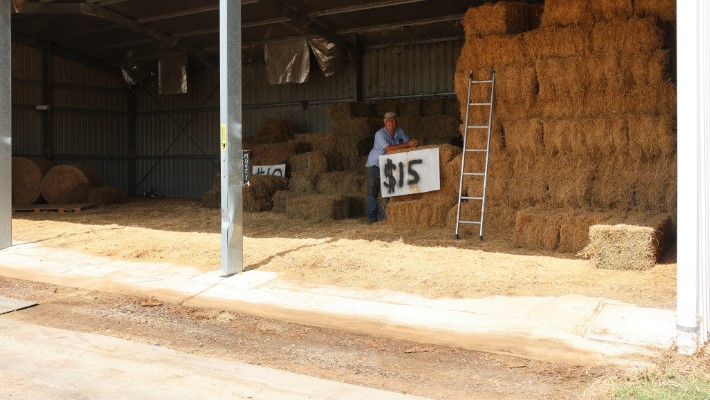
Pictured: Compliant hay storage - covered area, chemical perimeter treatment, fire ant-resistant surface (concrete).
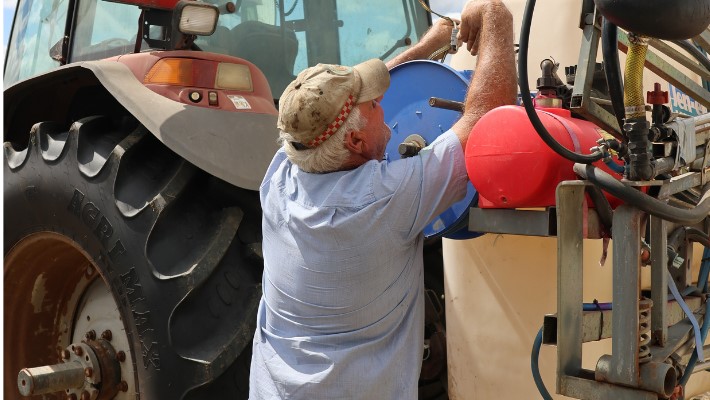
Pictured: Calibrated treatment equipment, filled quarterly with bifenthrin from a 1,000L tank, forms part of Tim's approach to maintaining compliance.
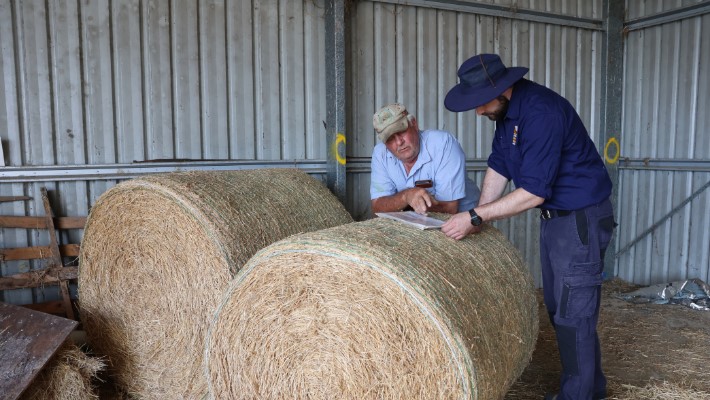
Pictured: Tim explains his record-keeping process to track buyers, destinations and compliance.
Coordinating compliance with hay production
Tim’s farm location requires close coordination with our program team to ensure treatments fit with how his farm operates.
Our Compliance Officer, Ben, emphasises:
‘We work side-by-side with hay producers in the eradication treatment area to ensure treatments fit in with day-to-day farm operations and seasonal work. The aim is simple… to help producers keep producing good hay without getting in the way. We offer practical, on-the-ground advice to reduce the risk of spreading fire ants, and we plan treatment activities around what’s happening on the farm—especially during broadcast treatment periods. Most producers see the value in this and are supportive of the work being done.’
This collaboration ensures producers can meet regulatory requirements without sacrificing productivity.
Key lessons and recommendations for hay producers
Tim’s experience shows that managing fire ants can be built into everyday farm work. His approach highlights practical steps to reduce risk, keep things running smoothly, and protect access to markets:
- Integrate compliance into daily routines to improve efficiency and reduce risk.
- Upgrade storage surfaces and use structural measures, like slabs, trenches, or treated perimeters, for long-term protection.
- Maintain chemical barriers through simple, routine hygiene practices.
- Schedule treatments to align with production cycles.
- Collaborate with program compliance officers for guidance and operational continuity while meeting regulations.
Tools and resources
Practical tools and resources are available to support fire ant compliance:
- Learn about hay management for fire ants.
- Watch the video on managing bailed material.
- Complete online fire ant training.
- Check whether your property, or the location you are moving equipment or material from, is within a fire ant biosecurity zone and use our fire ant compliance tool.