
Published 11 November 2026
Preventing the spread of fire ants relies on strong industry partnerships, and a recent symposium highlighted how compliance, education, and regulation work together to create regulatory experience that practically address biosecurity risks.
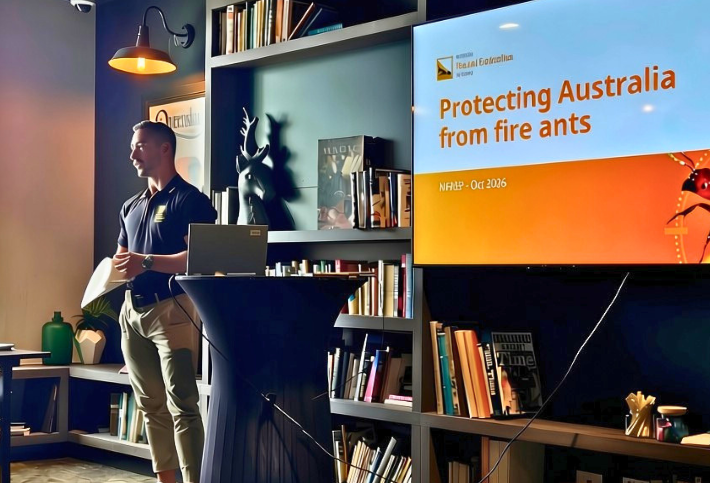
Our Proactive Compliance Unit recently presented at the Auctioneers and Valuers Association of Australia (AVAA) symposium in Brisbane on 23 October, engaging directly with auctioneers, valuers, and businesses involved in moving goods, machinery, and equipment.
Representatives from our program presented an interactive session that explored real-world compliance challenges linked to the human-assisted spread of fire ants.
One question that sparked discussion was: Who is responsible if fire ants are detected at an auction site … the landowner or the auction business?
Using real-world operational case studies, the session demonstrated how tracing activities can identify links between source sites, transport movements, and receiving businesses. It also highlighted how activities that may appear low risk, such as moving machinery with soil attached or storing items on infested ground, can contribute to the spread of fire ants when appropriate controls are not in place.
Program Compliance Manager Marcel Houbolt said the symposium provided a valuable opportunity to engage directly with industry and strengthen understanding of biosecurity responsibilities.
'Opportunities like this allow our officers to help industry better understand how fire ants spread and what businesses can do to meet their biosecurity obligations and help reduce risk,' Marcel said.
'Compliance is about supporting informed decisions that protect businesses and the broader community.'
The presentation also provided insight into what happens when fire ants are detected and a biosecurity order is issued, including the potential impacts of restricted movements, inspections, tracing activities, and changes to business operations.
'Sharing practical lessons from the field helps businesses understand how everyday actions can influence biosecurity outcomes,' Marcel said.
AVAA Chief Executive Troy Williams said the symposium helped build a shared understanding between industry and the National Fire Ant Eradication Program.
'These conversations help auctioneers understand fire ant risks while helping the program understand how auctions operate in practice,' Troy said.
'Auctioneers have an important role in preventing the spread of fire ants when machinery, equipment, and other assets are sold and moved.
'Working together helps turn awareness into practical actions that businesses can understand and apply.'
The symposium reflects our program's proactive regulatory approach, which combines education, engagement, and compliance activities to strengthen industry awareness and support Australia's ongoing fight against fire ants.