
Learn how to recognise fire ants and their nests. Know what to do if you find them.
How to identify fire ants
Fire ants (Solenopsis invicta) are small, dangerous ants that are commonly found outdoors.
You're most likely to see them in yards, gardens or in open areas like farms, parks and playgrounds.
What to look for
Varied sizes
Fire ants vary in size, even when they're from the same nest. Fire ant workers vary from 2mm to 6mm in length.
Copper-brown colouring
Fire ants have a copper-brown body, with a darker abdomen.
Aggressive behaviour
Fire ants are aggressive when their nests are disturbed. They respond to disturbances by swarming and repeatedly stinging.

Close-up image showing fire ant size and body detail.
Fire ant comparison
Fire ants can be mistaken for other ant species.
Use the images and information to help you compare the differences.
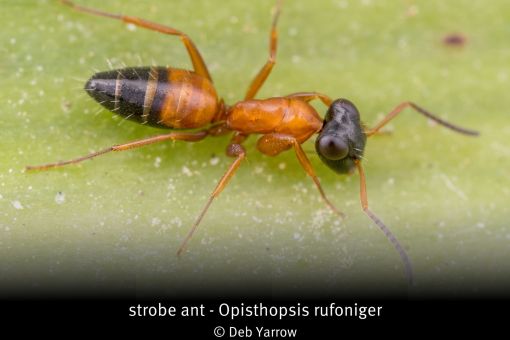
Strobe ants (Opisthopsis species)
- Bright red and black colouring
- Large, distinct black eyes
- Harmless, with no sting or spray
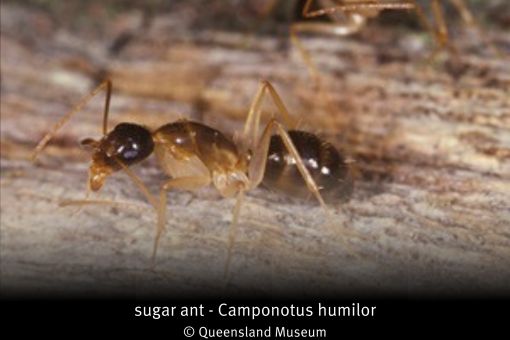
Sugar ants (Camponotus species)
- Different colours, such as golden yellow and black, or brown, or black
- Vary in size, however, generally larger than a fire ant
- Harmless, with no sting or spray

Meat ant (Iridomyrmex purpureus)
- Copper-brown or purple red, which can look like a fire ant
- Larger than a fire ant, up to 1cm in length
- Nests are large, visible mounds decorated with pebbles or gravel

Bicoloured pennant ant (Tetramorium bicarinatum)
- Yellowish-brown and brown-black colouring
- Similar in size to fire ants
- Workers from the same nest are the same size
- Has a painful sting
- Nests in soil under logs and pavers; and can be found in potted plants
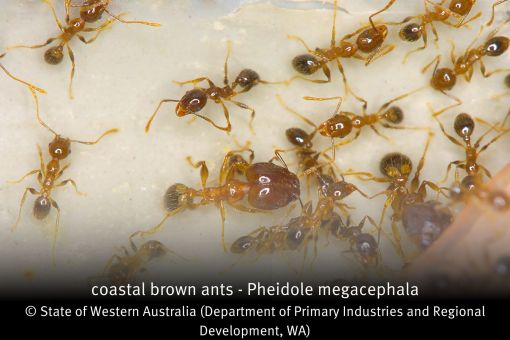
Big-headed ant or coastal brown ant (Phiedole megacephala)
- Light brown colouring
- Similar in size to fire ants
- Workers from the same nest have 2 sizes (major workers have much larger heads)
- Harmless, with no sting or spray
- Nests in soil under pavers, rocks or logs, and can come indoors. Tends to build a conical nest entrance that can become visible on the edges of pavers and garden paths
How to find fire ant nests
Fire ant nests can blend into their surroundings, making them difficult to recognise.
What to look for
Nest appearance can vary and change, based on:
- the age of the nest
- seasons
- weather conditions.
Newer nests can look like a part of the lawn. Always take care when checking your property.
Variable nest shapes
Fire ant nests can look like dome-shaped mounds or flat patches of loose soil, depending on the weather.
Nest sizing
Mound sizes vary widely depending on the soil type, the number of ants in the colony and the age of the nest.
Generally, nests are around 30cm wide and around 10cm high.
Hidden entry and exit holes
Nest entry and exit holes are not obvious, which helps them blend into their surroundings.
Nest locations
It is rare to find fire ants or their nests inside your house.
Fire ants build their nests in open areas such as:
- lawns
- gardens
- paddocks
- roadsides and driveways.
They're also regularly found under objects such as logs, bricks and pavers; or along the edges of waterbodies, such as dams.
Examples of fire ant nests

More mature nests are easier to recognise, with their distinct dome-shaped mound.

Newer or less established nests are less obvious. These nests can look like a small pile of soil sitting on top of grass.

Other nests appear flat, blending in with garden materials.
What to do if you see fire ants or nests
Keep a safe distance
To inspect the nest, make sure that you:
- wear clothing that covers any exposed skin, such as long sleeves, long pants, boots and gloves
- use a long stick to gently poke the nest, step back and observe the ants that come out.
Do not poke or touch the ants or the nest with your hands.
Take a photo
If you can do so safely, take a photo of the ants and the nest.
Let us know
Report ants and nests by using our online form or calling us on 13 22 68 (132 ANT).
Next steps
- Have you checked your yard for fire ants? Use our tips to inspect your property.
- Learn about the reporting process, including how to track your report.
- Discover treatment options available to you.