
Published 07 September 2026
When people think about fire ant eradication, they often focus on the risks fire ants pose to people, pets, and agriculture. However, fire ants also threaten some of our most important environmental allies—pollinators.
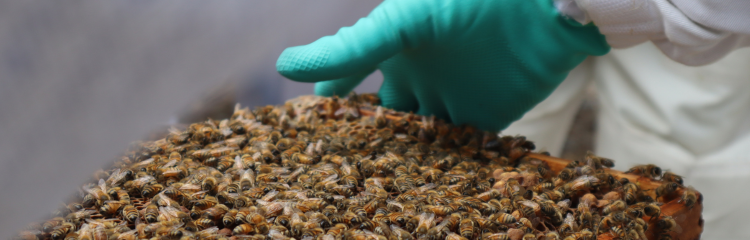
Bees and other pollinating insects play a vital role in maintaining healthy ecosystems and supporting food production. They help native plants reproduce, contribute to biodiversity, and pollinate many crops grown across Australia. The Queensland honeybee industry contributes more than $2.89 billion to the state's economy every year.
Fire ants are an invasive pest that can significantly impact the environment. They outcompete and displace native ant species, which can lead to the loss of native species when fire ants become established.
Fire ants also pose a direct threat to bees by attacking larvae and pupae within hives. These attacks can weaken colonies and, in some cases, cause them to collapse.
Fire ants pose a far greater risk to bee populations than the treatments used to eradicate them.
Principal Scientist Dr Wallace says the eradication treatment we use targets fire ants without attracting pollinators, including European honeybees, blue-banded bees, and native ground-dwelling bee species.
'The treatment products are safe for bees because they forage on nectar and pollen from specific sources,' Dr Wallace says.
This understanding is supported by testing conducted after a resident reported concerns that material found in a deceased hive may have come from fire ant eradication treatment. Laboratory testing detected no treatment residue in either the honey or wax.
The eradication treatment consists of corn grit soaked in soybean oil containing a low concentration of an insect growth regulator, either pyriproxyfen or S-methoprene. The formulation attracts ants that prefer a diet high in oil and protein, while reducing the likelihood of impacts on non-target species.
The Australian Pesticides and Veterinary Medicines Authority (APVMA) has assessed, registered, and approved fire ant treatments for more than 20 years under Australia's strict regulatory framework for agricultural and veterinary chemicals.
By controlling and eradicating fire ants, we help protect our bees and other pollinators, support biodiversity, and reduce the environmental impacts this super pest can cause.
How beekeepers can help
- Regularly check around your beehives for fire ants and nests.
- Report any findings, whether fire ants are present or not, online or by calling 132 ANT (13 22 68).
- Report any adverse reactions to fire ant eradication treatment to the Australian Pesticides and Veterinary Medicines Authority's Adverse Experience Reporting Program.