
Published 28 October 2026
Check for fire ants after rain and discover simple steps to protect your property.
Recent wet weather across South East Queensland has created ideal conditions for fire ants, and we are encouraging residents to check their property and local area for fire ants and report any findings.
Warm weather following rain can trigger reproductive fire ants to leave established colonies and build new nests. A single queen can fly up to 5 km before starting a colony and can lay up to 5,000 eggs per day, allowing fire ant populations to grow rapidly if left undetected.
Wet conditions can also cause established colonies to relocate to higher, drier ground. Fire ants may nest in or around materials stored outdoors, making them a potential pathway for spread. Inspect materials carefully before moving them and comply with any applicable movement requirements.
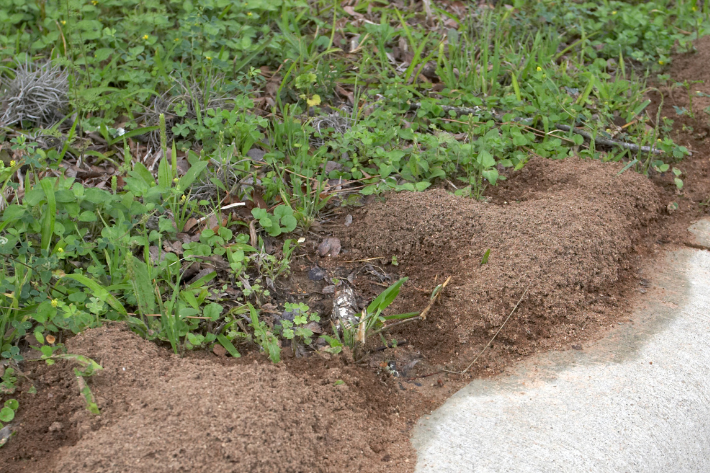
Recent rainfall make fire ants easier to detect, as ants often build nests higher above the ground following wet weather.
Community action plays a critical role in limiting the spread of fire ants. Here's how you can help:
- Check your property and local area—especially after storms or heavy rain—for fire ants.
- Report rafting, and suspect ants or nests online or by calling 132 ANT (13 22 68) within 24 hours.
- Inspect equipment, machinery and materials that can carry fire ants before moving them on or off your property.
- Treat fire ant nests on your property if you're in the suppression treatment area and when weather conditions are suitable.
Our call centre has received an increase in calls and reports following the recent wet weather. We thank the community for its vigilance and for taking the time to report suspect fire ants and nests. Every report helps our teams respond quickly and target fire ant activity.
Fire ants are one of the world's most invasive pests. Stay alert and help stop the spread.
Watch our video of rafting fire ants on Facebook.