
Published 15 June 2026
Ongoing wet weather across South East Queensland is driving increased fire ant activity, and residents and businesses need to stay alert.
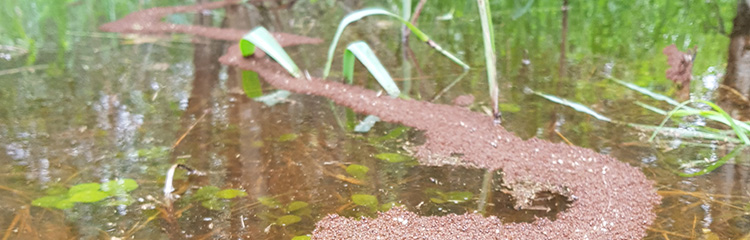
Fire ants respond quickly to flooding conditions. When water levels rise, they link their bodies together to form floating rafts that allow entire colonies to survive on the water's surface.
This behaviour is a last-resort strategy rather than a primary way to spread.
Fast-flowing water or prolonged submersion can break apart these rafts and kill many ants, and most colonies remain close to their original location.
After rain, fire ants tend to build their nests higher above ground, making them easier to spot. This creates a key opportunity to identify and address infestations. Warm, humid conditions also increase activity, particularly in mature single-queen (monogyne) colonies, which drive population growth.
Within about 24 hours of rainfall, winged fire ants — known as alates — often emerge in large numbers. They gather on nests before taking flight to mate. After mating, new queens usually establish nests within 500m of their parent colony, although some may travel up to 5km. Without intervention, this process can rapidly expand fire ant populations.
Community action plays a critical role in limiting their spread. Here's how you can help:
- Check your property and local area — especially after storms or heavy rain — for signs of fire ants.
- Report rafting, and suspect ants or nests online or by calling 132 ANT (13 22 68) within 24 hours.
- Inspect equipment, machinery and materials that can carry fire ants before moving them on or off your property.
- Treat fire ant nests on your property if you're in the suppression treatment area and when weather conditions are suitable.
Fire ants are one of the world's most invasive pests. Prompt action is critical — stay alert and help stop the spread of fire ants.
Watch our video of rafting fire ants on Facebook.